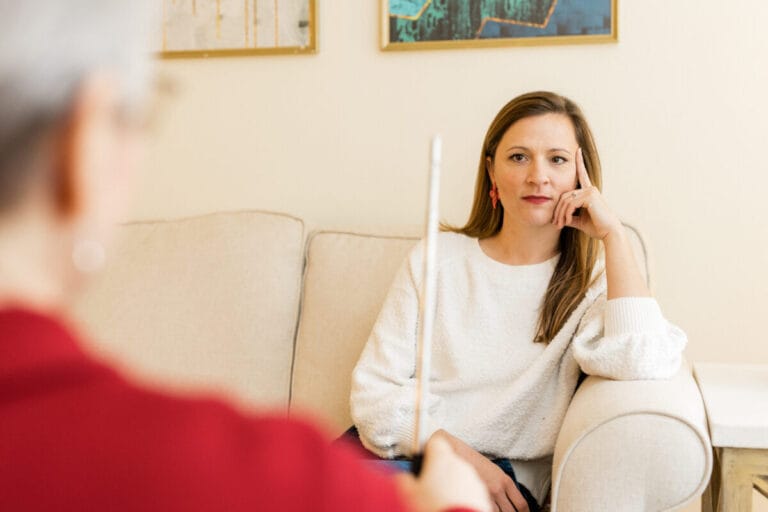
Good Premarital Counseling: Completing the Incomplete

Shakespeare wasn’t lying when he said, “Love is blind.” It’s true. We are often blinded to the faults and internal struggles of the ones we love. And because love is blind, it is helpful for engaged couples to do therapy work together before making a lifelong commitment.

We are biologically designed for connection, and selecting a partner to spend your life with is the biggest decision you will ever make. It helps tremendously to have a seasoned outsider break through the cloud of romance to challenge you both to dig deep into your past, examine your expectations, and talk through what the future may hold. This is why we offer premarital counseling at The Finding Place.

Why should we see a therapist for premarital counseling instead of a pastor or mentor?

Good premarital counseling is different from education; it goes beyond learning facts or having conversations about how many kids you want or how to communicate well. That knowledge is useful, but it is limited. And learning new information is not nearly as important as delving deep into the emotions, the heart, and the driving forces behind how each of you operate.

Because we live in a fallen world, and no family is perfect, everyone has some level of trauma connected to their attachment history. Essentially, everyone has childhood wounds that play out in relationships. And many people are blind to the connection, even in themselves. 

Let me give you a couple of examples– 

Your fiancé is a golden child; he is strong and resilient and a high achiever. That’s what you and other people see. But deep down, neglect is the motivating factor for his success because he was only praised as a child when he brought home a good grade or won an award. He wanted to please his parents so badly that he has no idea who he truly is or who he truly wants to be. 

Or maybe your fiancé grew up in a family where there were few to no boundaries, where asking to have her needs met was considered rude. She was made to feel responsible for her mother’s emotional outbursts, and she was shamed for not falling in line with the family’s opinions or beliefs. 

Both of these scenarios have the potential to create significant problems in a marriage relationship, and you need a trained eye to be able to see that and work through it. A licensed therapist has the knowledge, training, and experience necessary to heal these hurts and help your marriage succeed.

What other topics are typically covered in premarital counseling?

Along with family of origin issues and trauma histories, premarital counseling gives you the opportunity to discuss your attitudes about sex, money, child raising, and work. You will discuss how to manage friendships and in-law relationships as well as how to manage expectations for yourself, your partner, and your relationship.

You will also need to talk through the disagreements, concerns, or hurts in your current relationship because marriage will not solve these problems; it will only intensify them. Marriage is about completing the incomplete and finishing the unfinished. What unfinished business resides within you? It’s important to find out because it’s going to affect your marriage relationship. 

A quality couple’s therapist understands the hidden dynamics that affect satisfaction and relational health. We would be honored to help your marriage begin in the healthiest way possible.

The Finding Place Counseling and Recovery is located in Little Rock, Arkansas, and our therapists offer both secular and Christian premarital counselingContact us to schedule a session or book an intensive.

Similar Posts

  • Brainspotting for Anxiety: Treatment for Anxiety in Little Rock, AR.

    Many people come to therapy for anxiety after trying everything they can think of. They’ve read the books. Practiced breathing exercises. Challenged their thoughts. Talked through their stress.
    And yet, the anxiety remains.
    For some, anxiety isn’t just about distorted thinking or current stressors. It’s rooted deeper in the nervous system. When anxiety is tied to unresolved trauma, attachment wounds, or chronic overwhelm, traditional talk therapy may only reach part of the picture.
    This is where Brainspotting for anxiety can be especially powerful.

  • |

    Is Pornography Bad for My Marriage? What Couples Need to Know

    If you are asking this question, you are not alone. Many couples wonder how pornography fits into their relationship. Some people feel like it is not a big deal. Others feel deeply hurt by it. You may even feel confused because you are not sure what to think.
    The truth is, there is not one simple answer. Pornography affects every relationship differently. What matters most is how it is impacting trust, emotional safety, and connection between you and your partner.
    Why This Question Comes Up in Marriage
    For many couples, pornography becomes an issue when it creates tension or distance. One partner may discover it and feel blindsided. Another may feel judged or misunderstood for using it.
    Even if both partners know about it, it can still bring up hard emotions. You might feel:
    Hurt or rejected
    Confused about what is normal
    Worried about your relationship
    Unsure how to talk about it
    These reactions are more common than people realize. And they deserve attention, not dismissal.
    When Pornography Starts to Affect Connection
    Pornography is not just about what someone watches. It is about how it impacts the relationship.
    In some marriages, pornography becomes a private habit that replaces connection. Instead of turning toward each other, one partner turns away. Over time, this can create emotional and physical distance.
    In other cases, it changes expectations. Pornography often shows unrealistic bodies, reactions, and experiences. This can lead to comparison or disappointment, even if no one says it out loud.
    When this happens, intimacy can start to feel strained instead of natural.
    The Impact of Secrecy
    One of the biggest issues couples face around pornography is secrecy. When something is hidden, it can feel like a betrayal when it comes to light.
    The pain is often not just about the pornography itself. It is about the loss of trust.
    You may find yourself asking:
    “What else do I not know?”
    “Can I trust my partner?”
    “Is our relationship real?”
    These questions can feel overwhelming. They can also trigger deeper emotional responses, especially if trust has been broken in the past.
    Why This Can Feel So Personal
    If you are the partner who feels hurt, you might take this very personally. You may wonder if you are not enough or if your partner is no longer attracted to you.
    These thoughts can be painful, but they are also very human.
    If you are the partner who uses pornography, you may feel ashamed or defensive. You might not have intended to hurt your partner, and now you feel stuck between your behavior and their pain.
    Both experiences matter. Both deserve to be understood.
    The Role of Shame and Silence
    Many couples avoid talking about pornography because it feels uncomfortable. It can feel easier to ignore it or hope it goes away.
    But silence usually makes things worse.
    When there is no conversation, each person fills in the gaps on their own. Assumptions grow. Resentment builds. Emotional distance increases.
    Shame can also keep couples stuck. One partner may feel ashamed for their behavior. The other may feel ashamed for being upset about it.
    Shame shuts down connection. Honest conversation opens the door to healing.
    What Healthy Conversations Can Look Like
    Start with curiosity instead of blame. This can often be challenging for a partner because of the intense betrayal they may be experiencing. Try focusing on how each of you feels rather than trying to prove a point.
    You might explore questions like:
    “How is this affecting our relationship?”
    “What do we need to feel safe and connected?”
    “What moral standards are important to each of us?”
    These conversations can feel vulnerable, but they are an important step toward rebuilding trust and closeness.
    When It Becomes a Bigger Concern
    Sometimes pornography use may start to interfere with daily life or the relationship in noticeable ways.
    This can include:
    Using pornography to cope with stress or emotions
    Feeling unable to stop or cut back
    Losing interest in real life intimacy
    Spending increasing amounts of time on it
    Keep secrets from my partner
    When these patterns show up, it may be a sign of a deeper struggle that needs attention and support.
    When to Seek Help
    If pornography is creating tension, confusion, or distance in your marriage, seeking therapy from a qualified specialist (Certified Sex Addiction Therapist) is key and will feel different than just talk therapy alone.
    At The Finding Place Counseling in Little Rock, Arkansas, we offer couples therapy as well as sexual addiction recovery therapy. We understand that in order to treat the marriage, you also have to treat the underlying issues in each partner. Our team of therapists work together to provide exceptional therapy and gameplans for couples navigating pornography addiction, unwanted sexual behavior, and betrayal trauma.

  • How Shame Impacts Healing in Sexual Addiction and Betrayal Trauma

    Shame is one of the most powerful—and least understood—forces in sexual addiction and betrayal trauma. It operates quietly beneath the surface, shaping behavior, blocking vulnerability, and keeping both partners stuck in cycles they desperately want to escape.
    For those struggling with compulsive sexual behaviors, shame often fuels secrecy and relapse. For betrayed partners, shame can distort self-worth and delay healing. Without addressing shame directly, recovery efforts frequently stall, even when motivation and commitment are present.