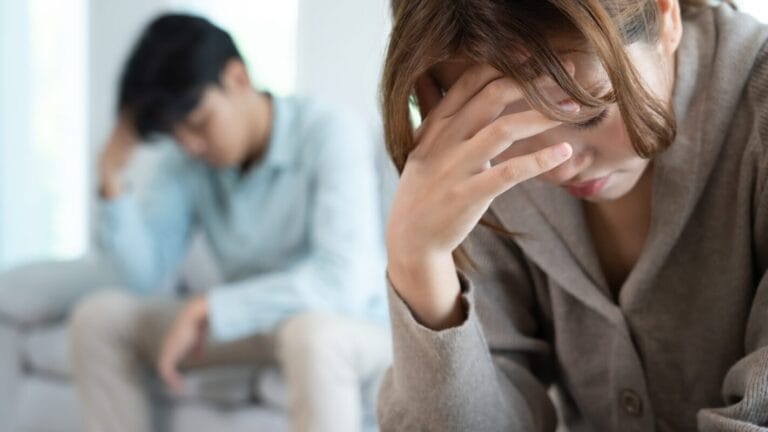
What Happens in Couples Therapy? A Trauma Informed Approach to Marriage Counseling

Starting couples therapy can feel intimidating.

Many people imagine sitting in a room while a therapist decides who is right and who is wrong. Others worry they’ll be forced to share more than they’re ready for, or that therapy means their marriage is failing.

In reality, trauma informed couples therapy looks very different from these fears.

Understanding what happens in couples therapy can make taking the first step feel less overwhelming.

The First Marriage Counseling Session

In the first marriage counseling session, the therapist’s primary goal is not to solve everything. It’s to understand the relationship.

You’ll likely talk about:

  • What brought you in
  • Patterns you’ve noticed
  • Areas of disconnection or tension
  • What each of you hopes will change

A trauma informed therapist also pays attention to emotional safety and nervous system dynamics. Who escalates? Who withdraws? When does the room feel tense? These observations help identify underlying patterns.

The first session is about clarity, not judgment.

Trauma Informed Marriage Therapy Is Not About Picking Sides

A common fear is that the therapist will “take sides.” In trauma informed couples therapy, the focus is on the cycle, not the villain.

Most couples are caught in a loop. One partner reacts. The other responds. The pattern repeats. Over time, both feel unheard or unsafe.

Rather than deciding who started it, therapy works to identify the cycle itself and help both partners respond differently.

When the cycle shifts, the relationship shifts.

What You’ll Actually Work On

Couples therapy typically includes:

  • Understanding emotional triggers and attachment patterns.
  • Learning how to regulate during conflict.
  • Practicing repair after misunderstandings.
  • Rebuilding trust if there has been betrayal.
  • Strengthening emotional and physical intimacy.

If trauma is part of the story, whether individual or relational, the therapist will integrate nervous system awareness and trauma informed approaches to support healing safely.

The work is structured but paced thoughtfully.

What Therapy Is Not

Couples therapy is not about forcing immediate vulnerability. It’s not about rehashing every argument. And it’s not about declaring a relationship “good” or “bad.”

It is about creating a space where both partners feel heard and understood, often for the first time in a long time.

Progress usually happens gradually. Small shifts in safety and regulation often lead to significant relational change.

Trauma Informed Marriage Therapy in Little Rock, Arkansas

If you’re searching for what happens in couples therapy or looking for trauma informed marriage therapy in Little Rock, Arkansas, know that the process is designed to feel collaborative, structured, and respectful.

Therapy does not mean your marriage is beyond repair. In many cases, couples seek support before a crisis, and that proactive step can strengthen long term connection.

Marriage counseling is not about fixing one partner. It’s about building safety, clarity, and resilience in the relationship as a whole.

Taking the First Step

It’s normal to feel hesitant. Most couples wait longer than they wish they had before reaching out.

But starting therapy doesn’t require certainty, it only requires willingness.

At The Finding Place Counseling, couples therapy is grounded in nervous system awareness, attachment science, and trauma informed care. The goal is not perfection. It is connection that feels steady, secure, and sustainable.

Similar Posts

  • |

    Is Pornography Bad for My Marriage? What Couples Need to Know

    If you are asking this question, you are not alone. Many couples wonder how pornography fits into their relationship. Some people feel like it is not a big deal. Others feel deeply hurt by it. You may even feel confused because you are not sure what to think.
    The truth is, there is not one simple answer. Pornography affects every relationship differently. What matters most is how it is impacting trust, emotional safety, and connection between you and your partner.
    Why This Question Comes Up in Marriage
    For many couples, pornography becomes an issue when it creates tension or distance. One partner may discover it and feel blindsided. Another may feel judged or misunderstood for using it.
    Even if both partners know about it, it can still bring up hard emotions. You might feel:
    Hurt or rejected
    Confused about what is normal
    Worried about your relationship
    Unsure how to talk about it
    These reactions are more common than people realize. And they deserve attention, not dismissal.
    When Pornography Starts to Affect Connection
    Pornography is not just about what someone watches. It is about how it impacts the relationship.
    In some marriages, pornography becomes a private habit that replaces connection. Instead of turning toward each other, one partner turns away. Over time, this can create emotional and physical distance.
    In other cases, it changes expectations. Pornography often shows unrealistic bodies, reactions, and experiences. This can lead to comparison or disappointment, even if no one says it out loud.
    When this happens, intimacy can start to feel strained instead of natural.
    The Impact of Secrecy
    One of the biggest issues couples face around pornography is secrecy. When something is hidden, it can feel like a betrayal when it comes to light.
    The pain is often not just about the pornography itself. It is about the loss of trust.
    You may find yourself asking:
    “What else do I not know?”
    “Can I trust my partner?”
    “Is our relationship real?”
    These questions can feel overwhelming. They can also trigger deeper emotional responses, especially if trust has been broken in the past.
    Why This Can Feel So Personal
    If you are the partner who feels hurt, you might take this very personally. You may wonder if you are not enough or if your partner is no longer attracted to you.
    These thoughts can be painful, but they are also very human.
    If you are the partner who uses pornography, you may feel ashamed or defensive. You might not have intended to hurt your partner, and now you feel stuck between your behavior and their pain.
    Both experiences matter. Both deserve to be understood.
    The Role of Shame and Silence
    Many couples avoid talking about pornography because it feels uncomfortable. It can feel easier to ignore it or hope it goes away.
    But silence usually makes things worse.
    When there is no conversation, each person fills in the gaps on their own. Assumptions grow. Resentment builds. Emotional distance increases.
    Shame can also keep couples stuck. One partner may feel ashamed for their behavior. The other may feel ashamed for being upset about it.
    Shame shuts down connection. Honest conversation opens the door to healing.
    What Healthy Conversations Can Look Like
    Start with curiosity instead of blame. This can often be challenging for a partner because of the intense betrayal they may be experiencing. Try focusing on how each of you feels rather than trying to prove a point.
    You might explore questions like:
    “How is this affecting our relationship?”
    “What do we need to feel safe and connected?”
    “What moral standards are important to each of us?”
    These conversations can feel vulnerable, but they are an important step toward rebuilding trust and closeness.
    When It Becomes a Bigger Concern
    Sometimes pornography use may start to interfere with daily life or the relationship in noticeable ways.
    This can include:
    Using pornography to cope with stress or emotions
    Feeling unable to stop or cut back
    Losing interest in real life intimacy
    Spending increasing amounts of time on it
    Keep secrets from my partner
    When these patterns show up, it may be a sign of a deeper struggle that needs attention and support.
    When to Seek Help
    If pornography is creating tension, confusion, or distance in your marriage, seeking therapy from a qualified specialist (Certified Sex Addiction Therapist) is key and will feel different than just talk therapy alone.
    At The Finding Place Counseling in Little Rock, Arkansas, we offer couples therapy as well as sexual addiction recovery therapy. We understand that in order to treat the marriage, you also have to treat the underlying issues in each partner. Our team of therapists work together to provide exceptional therapy and gameplans for couples navigating pornography addiction, unwanted sexual behavior, and betrayal trauma.